
connecting dots.
on mutual aid, the bare minimum, and asking ourselves the hard questions.

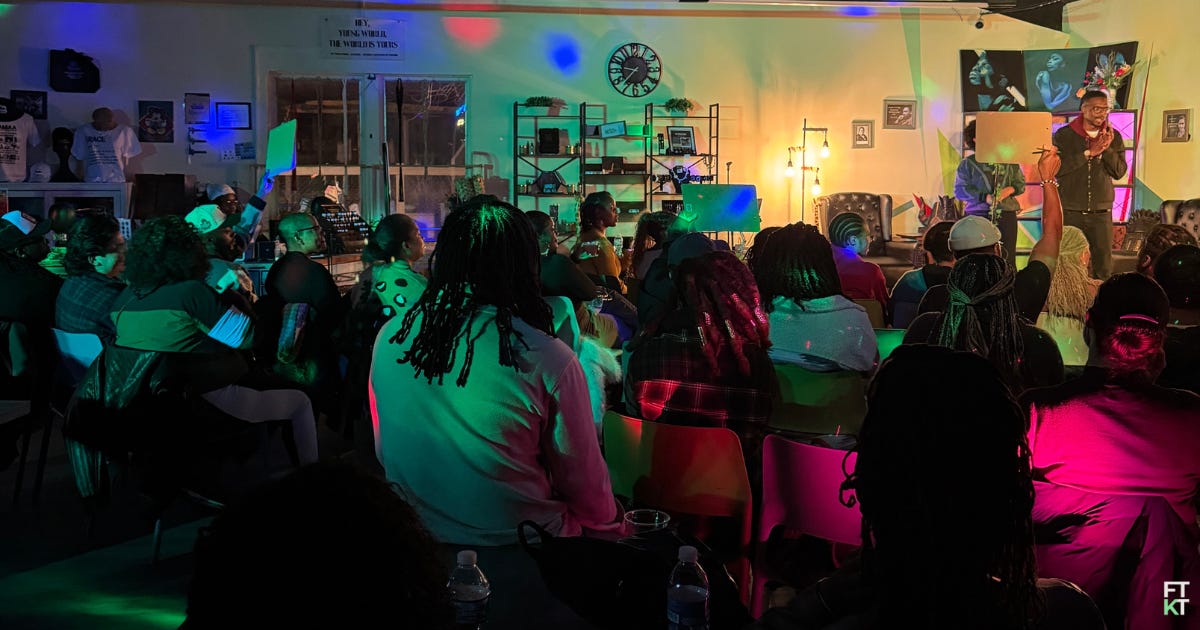
I went to a mutual aid forum tonight. Afterwards, I got the chance to connect with the founder of a mutual aid group in Indianapolis and they shared something with me that really resonated. They said:
We need more public-facing people. We need more people who are just willing to talk about what's going on, to explain what's going on. We need people to connect the dots.
It made me think about an event I was at earlier this year. A bunch of folks gathered to hear a panel of people talk about some legislation moving through the statehouse.
Near the end, someone asked how you balance being an activist when you're also a parent and a business owner and this and that. It's a valid question. And the answers the panelist gave ranged from knowing your capacity to knowing your not alone in the fight, common (and common sense) places to start.
While I didn't share, I wish I would have said something like what was said to me tonight: educate yourself and talk about it.
Maybe that starts with your close friends. Maybe it's your family. Maybe a coworker. But that's a great place to start, because the more we talk about it openly, the more people become aware of what's happening and then maybe, hopefully, they'll join the fight.
It's a great place to start; it's also different than what my original thought was.
This event happened just a few days after Reneé Goode was murdered, and the person who asked the question was white. I mention that because part of the discourse coming out of Reneé Goode's (and Alex Pretti's) murder was that white folks were saying things like "this is why we don't go protest" and "this is why I don't speak out." And, at least for me, it very much felt like this person was coming from that same place.
Of convenience.
Of comfort.
Of privilege.
And what I really wanted to say, not just to this person, but to the entire room, was that if you are not willing to sacrifice, at the bare minimum, some of your comfort, convenience, and privilege to do this work, you need to ask yourself why that is before you take that step.
I say this as someone with privilege, with comfort, with convenience.
I say this as someone who has had to ask themselves that very question.
At the mutual aid event tonight, one of the organizers shared that this work is hard and exhausting. The burnout is real. And if we don't take care of ourselves, we run the risk of not being able to show up for the people who need us.
And like some of the panelists from the previous event, folks who have been involved in mutual aid work here in Indy shared tips like knowing yourself and knowing you're not alone as things to keep in mind, whether you're new to the work or have been in it.
Here's the thing: if we don't have more people joining the fight, it falls on the people who have been doing this work tirelessly, thanklessly, the entire time. Which means we need people to start, even if it's just the bare minimum like going to an event like I did tonight or reading a book on the history of mutual aid work or going to rally or having a conversation with a friend about what you're learning or hearing or seeing.
We need you.
Here's the other thing (okay, there are many things): no matter what you're most passionate about -- housing, healthcare, affordability, education, immigration -- it is most likely connected to another thing that someone else is most passionate about, MCU-style: IT'S ALL CONNECTED.
And like the organizer said to me, we need people to start connecting the dots.
If you take anything away from this, know that there is no wrong way or time to start doing this work. Just asking yourself, "what am I most passionate about" or "what do I have capacity for" or "what am I willing to sacrifice" is a start, and a great one at that. Then educate yourself. Volunteer for organizations doing mutual aid work.
Then show up.
And listen.
And ask.
Then start speaking about it. Talk to a friend. Head to a local organization meeting. Post about it on social media.
I recently heard someone say that we often conflate small action with small impact. The truth is the size of our actions is rarely a good indicator of the impact those actions have. Most of the time, we don't see the impact we create. We do, and then move forward. Now is the time for action. Now is the time to act.
Ask.
Show up.
Listen.
Learn.
Act.
Find time for rest and joy.
Find time to be in community.
Now is the time.